
By Abdul Chowdhury | Dynamic Tax & Accounting
At a Glance
- The One Big Beautiful Bill Act (OBBBA), signed July 2025, permanently restored or expanded five major small business deductions
- 100% bonus depreciation is now permanent — deduct the full cost of qualifying equipment and property in year one
- Section 179 deduction 2026 limit raised to $2,560,000 — with a phase-out starting at $4,090,000
- QBI deduction permanent as of 2025 — 20% off pass-through business income, with higher phase-in thresholds ($75K single / $150K joint)
- R&D expenses can be immediately deducted again — no more 60-month amortization
- Employer childcare credit expanded to 40% of costs (50% for small businesses), max $600,000
- SALT cap 2026 raised to $40,400 — significant relief for NYC and NJ business owners who itemize
- Dynamic Tax & Accounting helps small businesses in Queens, Bronx, Totowa NJ, Buffalo, and nationwide structure these deductions correctly
Running a small business in New York or New Jersey is expensive. Between rent, payroll, insurance, and equipment, the costs add up fast. The good news: 2026 is one of the most favorable tax years for small business owners in recent memory — and understanding which small business tax deductions to prioritize can make a meaningful difference in what you keep.
The One Big Beautiful Bill Act (OBBBA), signed into law in July 2025, permanently extended or significantly expanded several key deductions that can put real money back in your pocket — money that was available before but is now locked in long-term, giving you the confidence to plan around it.
Here’s a breakdown of the five deductions worth your attention right now, how they interact with each other, and how to make sure you’re capturing every dollar you’re entitled to.
Signs You’re Not Maximizing Your Deductions
Before we get into the strategies, run through this checklist. If any of these describe your situation, you’re likely leaving money on the table:
- You purchased equipment, vehicles, or technology for your business in 2025 or 2026 — but you’re still depreciating them over several years
- You’re an S-corp owner, sole proprietor, LLC, or partnership — but you’ve never calculated your QBI deduction
- Your business conducted any software development, testing, or process improvement work — but you didn’t deduct those R&D costs immediately
- You spent money on childcare benefits for employees — but you haven’t claimed the employer childcare credit
- You pay high New York or New Jersey state and local taxes — but your SALT deduction has been capped at $10,000 on prior returns
- You’re planning a major asset purchase — but you haven’t talked to a tax professional about the optimal depreciation strategy
- You’ve never heard of cost segregation, bonus depreciation stacking, or QBI wage limits
- Your effective tax rate feels higher than it should be for your income level
If two or more of these apply, keep reading — there’s real money here.
Deduction 1: 100% Bonus Depreciation 2026 — Restored Permanently
If you bought equipment, machinery, vehicles, or certain property improvements for your business in recent years, you may have seen this benefit erode. Under the old schedule, bonus depreciation was falling each year:
- 2023: 80%
- 2024: 60%
- 2025 (pre-OBBBA): 40%
The OBBBA reversed that completely: 100% bonus depreciation is now permanent, effective for qualifying property placed in service after January 19, 2025, according to Carr Riggs & Ingram.
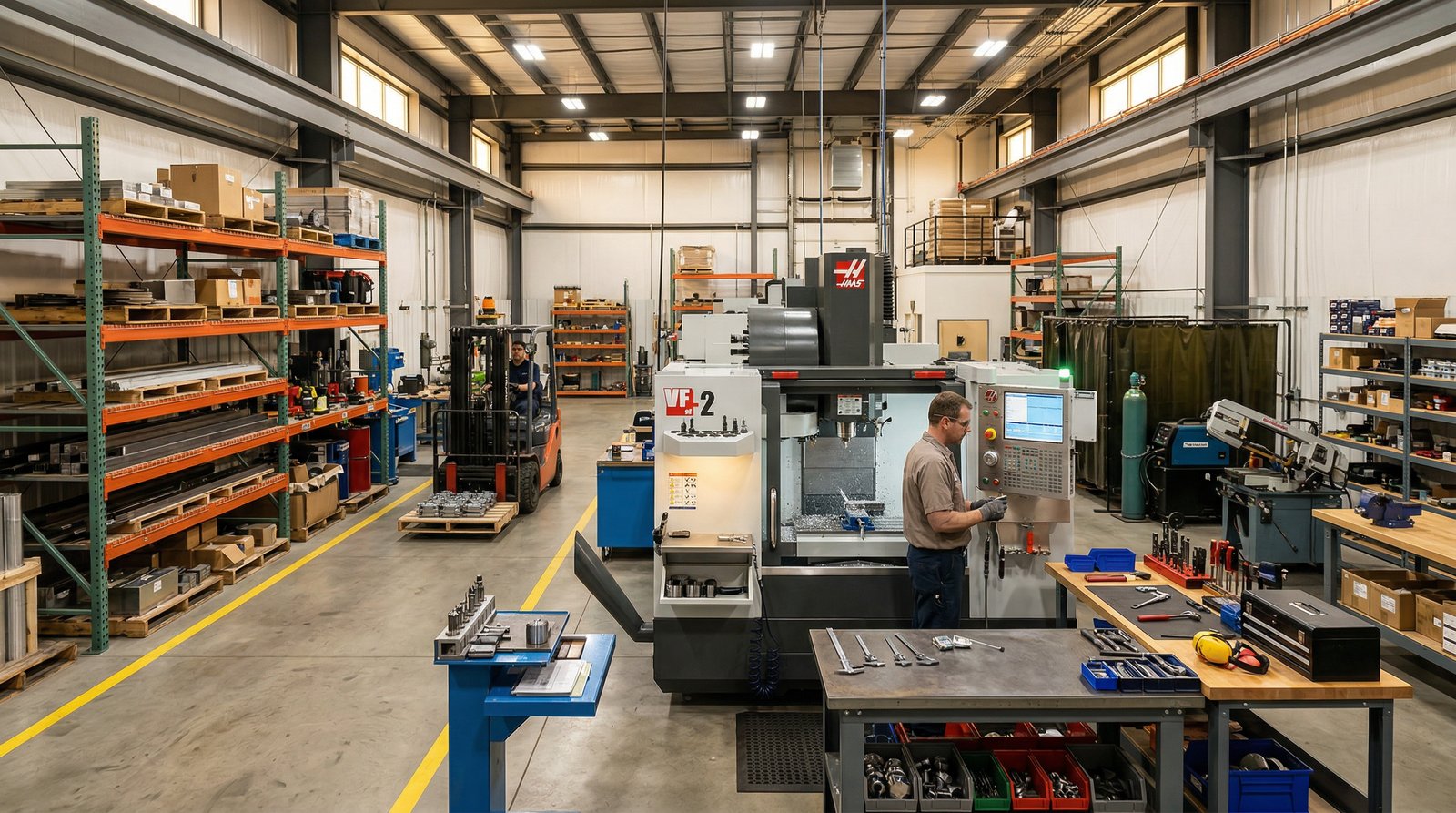
What this means in practice: If you buy a qualifying asset in 2026 — a new piece of equipment, a work van, computers, office furniture — you can deduct the entire purchase price in the year you buy it, rather than depreciating it slowly over 5, 7, or 15 years. For small business owners wondering how to reduce small business taxes in 2026, this is one of the most immediate levers available.
What qualifies: Most tangible business property with a cost recovery period of 20 years or less, including machinery, equipment, vehicles (subject to luxury auto limits), computers, certain building improvements, and qualified improvement property (QIP). See IRS Publication 946 for the complete eligibility rules.
The dollar impact:
A landscaping company buys a $60,000 commercial mower in 2026. Under the old phase-down (40% bonus depreciation), they’d deduct $24,000 in year one and depreciate the remaining $36,000 over the next several years. Under 100% bonus depreciation, they deduct the full $60,000 in 2026. At a 24% effective tax rate, that’s $14,400 in tax savings this year instead of $5,760 — a difference of $8,640 in cash the business keeps immediately.
This is a powerful cash-flow strategy. Rather than waiting years to recover the cost of a major purchase, you get the full deduction now, reducing your taxable income dollar for dollar.
Important note on vehicles: Luxury auto limits under IRS Section 280F cap first-year depreciation deductions for passenger automobiles. For 2025, the limit for passenger cars was $12,400 in year one (with bonus depreciation). Heavy SUVs over 6,000 lbs. gross vehicle weight are not subject to the same cap — a reason many business owners choose larger vehicles.
Deduction 2: Section 179 Deduction 2026 — More Room Than Ever
Section 179 and bonus depreciation often accomplish similar goals — letting you write off asset purchases faster than the standard depreciation schedule. But the differences matter when you’re planning.
The OBBBA raised the Section 179 expensing limit to $2,560,000 for 2026, with a dollar-for-dollar phase-out beginning at $4,090,000 in total asset purchases. As Insureon notes, this cap is designed for small and mid-sized businesses — not large corporations buying hundreds of millions in assets.
Example: A Queens-based HVAC contractor buys $120,000 in equipment and a $45,000 work van in 2026. They apply Section 179 to the van ($45,000) and bonus depreciation to the equipment ($120,000). Total first-year deduction: $165,000. At a 22% marginal rate, that’s $36,300 in tax savings instead of spreading deductions over years.
Deduction 3: The QBI Deduction Is Now Permanent
The 20% Qualified Business Income (QBI) deduction was originally a temporary provision of the 2017 Tax Cuts and Jobs Act, scheduled to expire after 2025. If you’re a pass-through business owner — sole proprietor, partnership, S-corporation, or LLC — you’ve been living with uncertainty about whether this deduction would survive. The OBBBA made it permanent.
Here’s what changed beyond permanence, per Carr Riggs & Ingram:
Higher phase-in thresholds:
- $75,000 for single filers (up from $50,000)
- $150,000 for married filing jointly (up from $100,000)
Example: An S-corporation owner takes $130,000 in pass-through income. QBI deduction = 20% × $130,000 = $26,000. At a 22% marginal tax rate, that’s $5,720 in federal tax savings purely from this one deduction.
This deduction is one of the most powerful in the tax code for small business owners — and now that it’s permanent, you can structure your business around it with confidence.
Deduction 4: R&D Expenses — Immediate Deduction Restored
The OBBBA reversed the 60-month amortization requirement: R&D expenses are immediately deductible again, restoring the rule that existed before 2022. For business owners researching OBBBA tax changes for small business, this is one of the most overlooked wins in the legislation.
The dollar impact: A Totowa, NJ-based software firm spends $80,000 developing a new application feature. Under the restored immediate expensing rule, they deduct $80,000 in the year they incur the cost. At a 24% rate, that’s a $19,200 deduction this year versus $3,840 under the old 60-month amortization — a timing difference of $15,360 in year-one cash.
Deduction 5: Employer-Provided Childcare Credit
According to Carr Riggs & Ingram, the employer-provided childcare credit was expanded: Standard businesses get 40% of qualifying costs (up from 25%), max $500,000. Small businesses get 50% of qualifying costs, max $600,000.
Example: A small Queens-based business pays $50,000 in qualifying childcare benefits for employees in 2026. The 50% small business credit = $25,000 in tax credits (not deductions — credits reduce your tax bill dollar for dollar).
Bonus: The SALT Cap 2026 — Big News for NYC and NJ Business Owners
The OBBBA raised the SALT deduction cap from $10,000 to $40,400 for 2026, with a phase-out for high earners above $505,000 in MAGI. According to Chase, this is one of the most impactful changes for residents in high-tax states.
Under the old $10,000 cap, a Queens business owner paying $18,000 in state income taxes and $14,000 in property taxes was limited to deducting just $10,000 out of $32,000. Under the new $40,400 limit, the full $32,000 is deductible — a difference of $22,000 in additional deductions. At a 32% marginal federal rate, that saves $7,040 in federal taxes.
How Dynamic Tax & Accounting Helps Small Business Owners in NYC and NJ
At Dynamic Tax & Accounting, we work with small business accounting services throughout New York City — including Queens and the Bronx — as well as Totowa NJ, Buffalo, and virtually nationwide to build tax strategies that match how your business actually operates.
- Depreciation strategy modeling: We run both Section 179 and bonus depreciation scenarios side by side
- QBI optimization: We structure your entity and compensation to maximize your 20% deduction
- R&D expense identification: We review your operations to identify qualifying R&D costs
- Employer childcare credit planning: We calculate the credit and handle documentation
- SALT/PTET strategy: For NY and NJ business owners, we model whether the Pass-Through Entity Tax election makes sense given the new $40,400 SALT cap
- Year-round planning: Major purchases, hiring decisions, and entity changes should be tax-planned before you make them
Frequently Asked Questions
What are the most valuable small business tax deductions for 2026?
The top deductions for small business owners in 2026 are 100% bonus depreciation, the Section 179 deduction (now up to $2,560,000), the permanent QBI deduction (20% of qualified business income), immediate R&D expensing, and the expanded employer childcare credit. For business owners in New York and New Jersey, the SALT cap increase from $10,000 to $40,400 is also significant.
How do I find a small business tax accountant near me in NYC or NJ?
Dynamic Tax & Accounting has offices in Queens, the Bronx, Totowa NJ, and Buffalo — and serves clients nationwide — with specific expertise in NYC and NJ small business tax strategy, including PTET elections, QBI optimization, and depreciation planning.
How can I reduce my small business taxes in 2026?
The most effective ways include maximizing bonus depreciation on equipment purchases, electing the Section 179 deduction, claiming the permanent QBI deduction, deducting R&D expenses immediately, and evaluating the expanded SALT cap. The key is coordinating these deductions in the right order.
What does “QBI deduction permanent” mean for my small business?
The QBI deduction — which allows pass-through business owners to deduct up to 20% of their qualified business income — was originally set to expire after 2025. The OBBBA made it permanent, meaning you can now build long-term business structure decisions around it.
Contact Us
Ready to build a tax strategy that actually captures what the law allows? Let’s talk.
Phone: (646) 295-3811
Email: admin@dynamicsrv.com
Online: www.dynamicsrv.com/contact-us-2/
Resources
- IRS Publication 946 — How to Depreciate Property
- IRS Section 199A — QBI Deduction FAQs
- IRS Publication 535 — Business Expenses (R&D)
- IRS — Employer-Provided Childcare Credit (Form 8882)
- Chase — One Big Beautiful Bill Tax Changes
Our Offices
Bronx Office: 2044 McGraw Ave., Bronx, NY 10462
Queens Office: 168-29 Hillside Ave. 2C, Jamaica, NY 11432
Buffalo Office: 1989 Clinton St, Buffalo, NY 14206
New Jersey Office: 63 Union Blvd. Totowa, NJ 07512
Disclaimer: This article is for informational purposes only and does not constitute legal, tax, or financial advice. Individual circumstances vary. Please consult a qualified tax professional before making financial decisions.